Some places are impressive because of their scale. Others stay with you because of how they make you feel when you arrive there.
UNESCO World Heritage Sites are recognised for their cultural or natural importance, but seeing them as part of an exploration cruise often brings a very different perspective. Approaching remote coastlines by ship, travelling slowly between communities, or stepping ashore in places with few visitors changes the experience entirely. It becomes less about ticking off landmarks and more about understanding the landscapes, wildlife and cultures that shaped them.
These are five UNESCO World Heritage sites that feel particularly rewarding to experience by small ship.
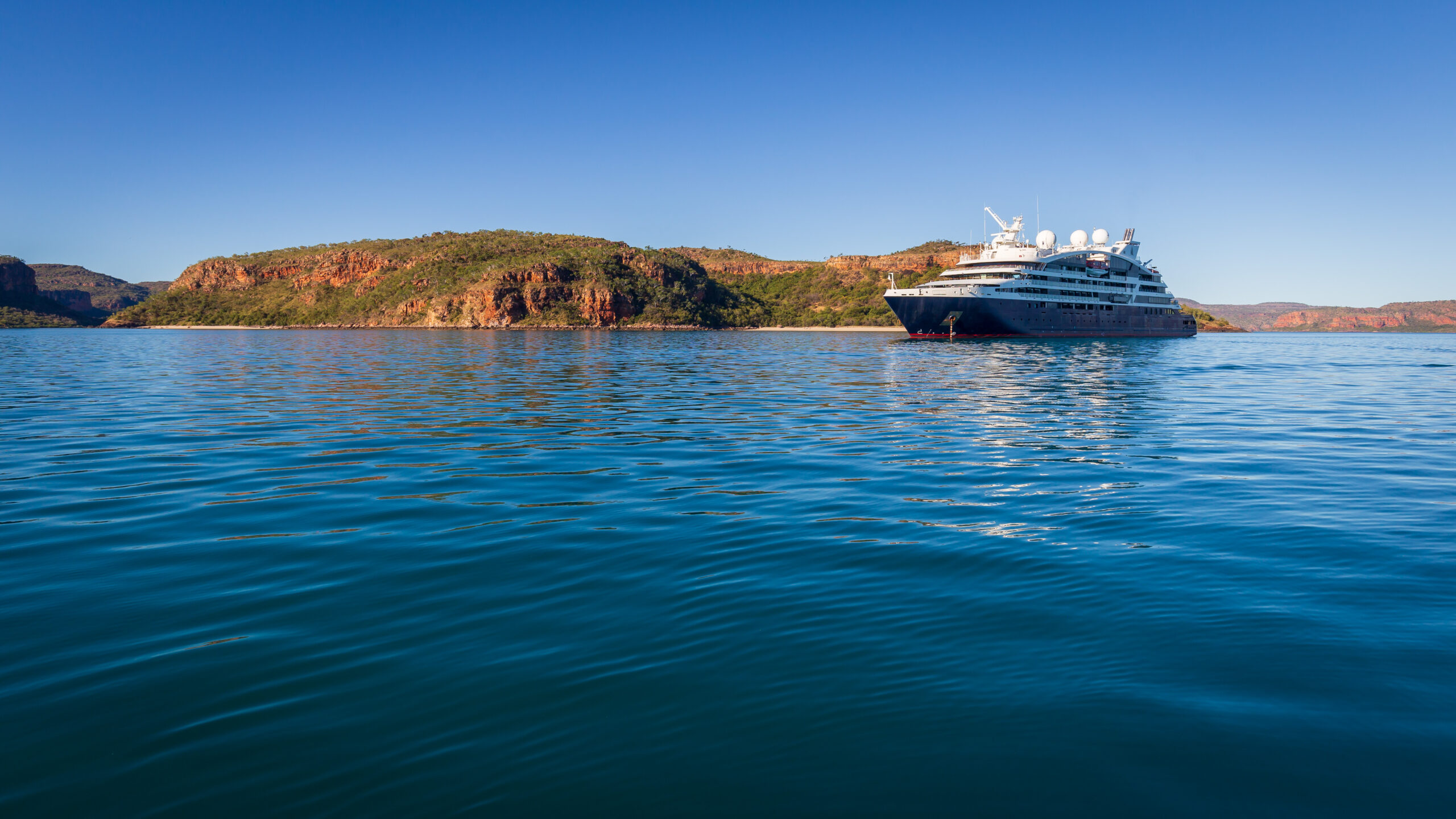
The Galápagos Islands, Ecuador
Perhaps nowhere feels more closely tied to exploration travel than the Galápagos Islands. Isolated in the Pacific Ocean around 600 miles off the coast of Ecuador, this volcanic archipelago remains one of the world’s most extraordinary wildlife destinations.
What makes the Galápagos so remarkable is not simply the species you encounter, but how present they are. Sea lions stretch out across landing sites, marine iguanas gather on black lava rocks, and giant tortoises move slowly through highland forests seemingly unbothered by visitors.
Travelling by small expedition ship allows you to explore multiple islands over the course of a journey, each with its own distinct landscapes and wildlife. One day may bring snorkelling alongside penguins and sea turtles, the next walking through cactus forests beneath nesting frigatebirds.
The rhythm of exploration here feels constant, shaped by nature, isolation and the changing volcanic scenery around you.
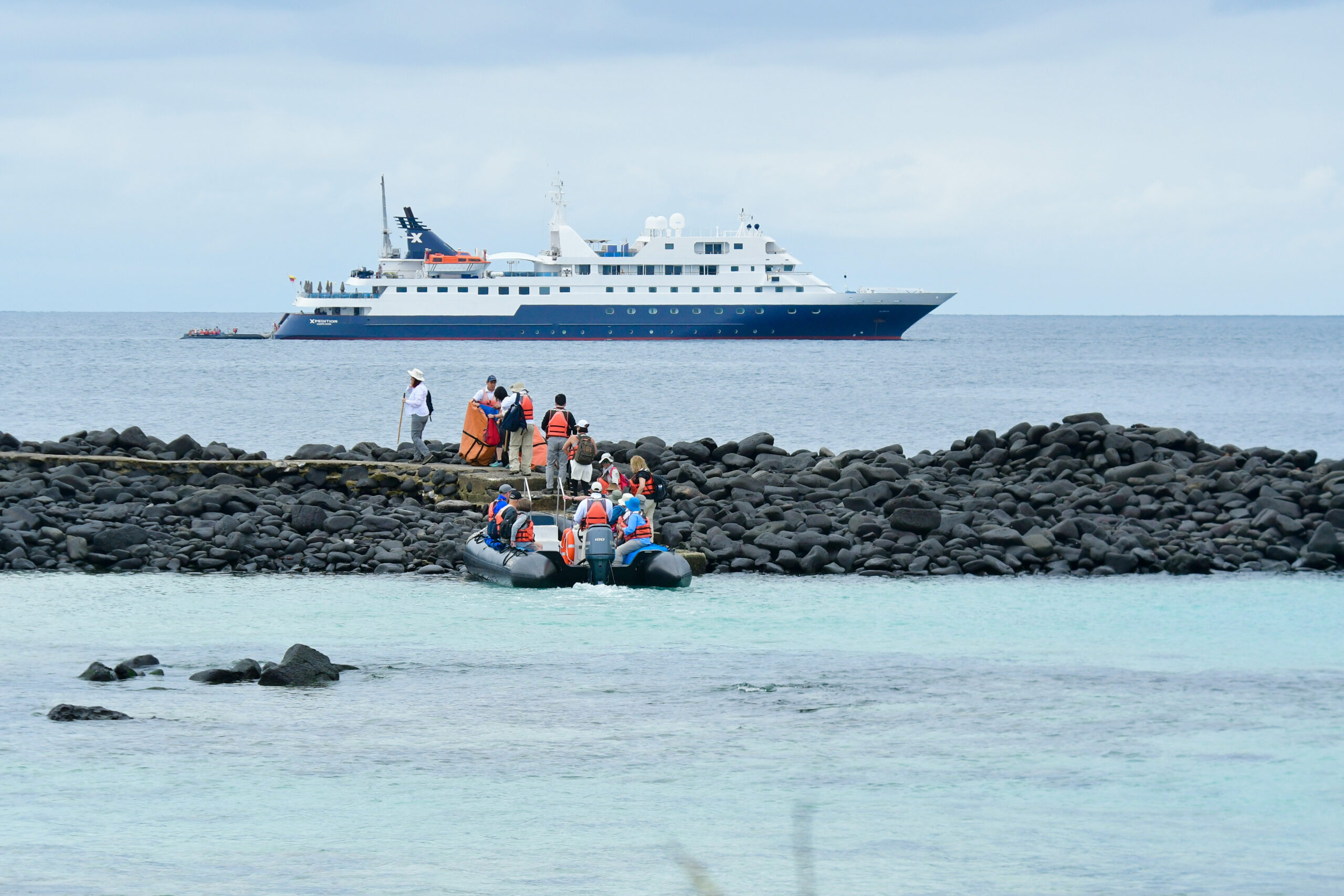
Raja Ampat, Indonesia
Spread across a maze of jungle-covered islands and turquoise waterways, Raja Ampat in Indonesia is one of the most biodiverse marine environments on Earth.
Located in West Papua, this UNESCO-recognised region sits within the Coral Triangle and is best explored by small ship, where remote anchorages and lesser-visited islands become part of the journey itself.
Days here are often spent moving between limestone karst islands, drifting above coral gardens filled with marine life, or visiting small coastal communities where life remains closely connected to the sea.
What stands out most about Raja Ampat is the feeling of remoteness. Even after days exploring the region, it can still feel as though you’ve only scratched the surface of it.
The pace is unhurried, shaped by tides, weather and the landscapes around you rather than fixed schedules.
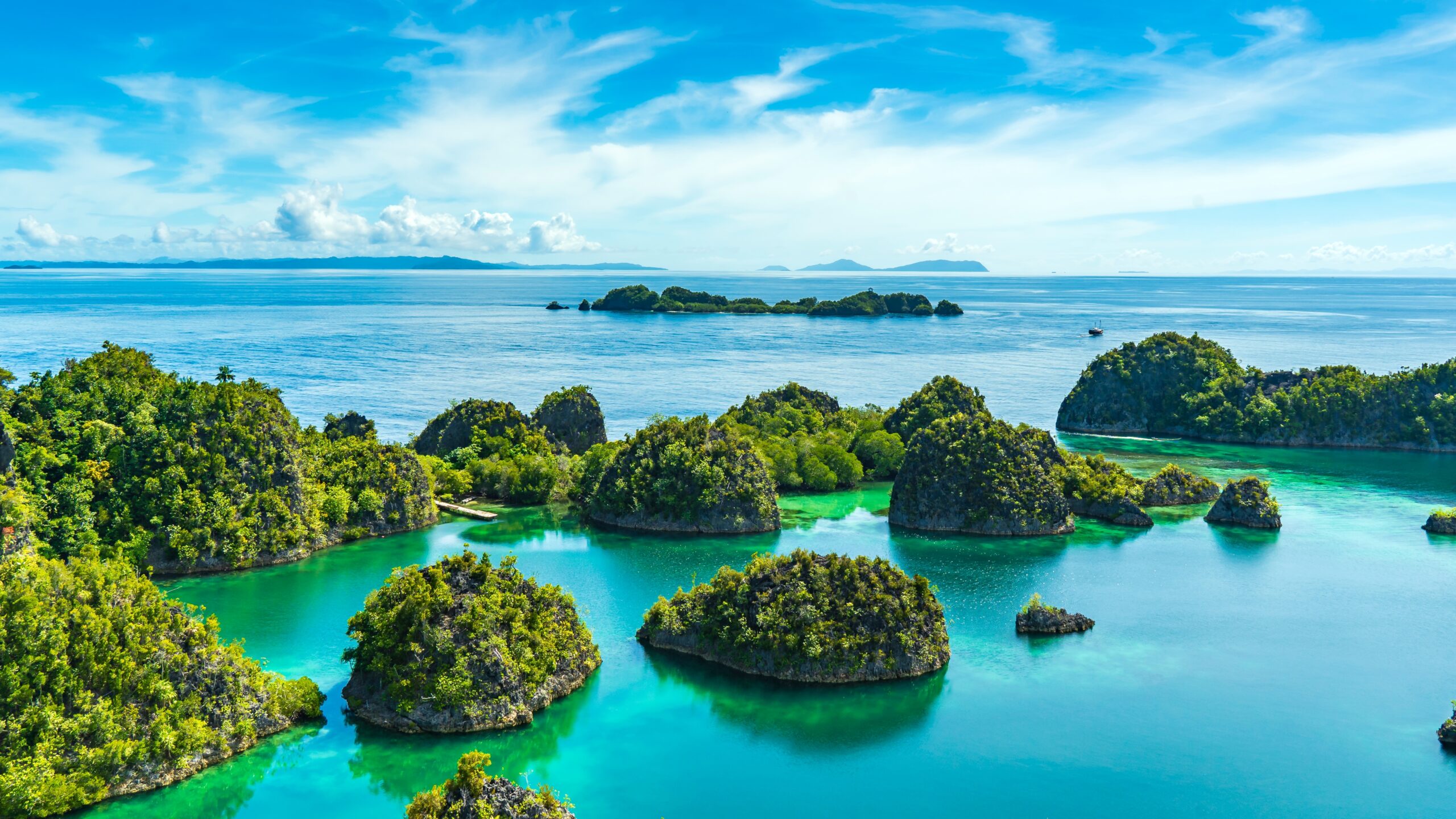
lulissat Icefjord, Greenland
There are few places where the scale of nature feels quite as overwhelming as Greenland’s Ilulissat Icefjord.
This UNESCO World Heritage Site lies on Greenland’s west coast and is home to one of the fastest-moving glaciers in the world. Icebergs calve constantly into the fjord before drifting slowly out into Disko Bay, creating a landscape that feels almost impossible in scale.
Exploring Greenland by ship offers a perspective that simply can’t be replicated on land. Sailing quietly between towering icebergs, watching the light shift across the ice through the evening, or hearing the distant crack of glaciers in otherwise complete silence becomes part of daily life onboard.
But beyond the scenery itself, journeys here also reveal Greenland’s human side. Small settlements scattered along the coastline offer insight into communities shaped by Arctic conditions, tradition and resilience.
It’s a destination that feels both immense and deeply personal at the same time.
The Norwegian Fjords, Norway
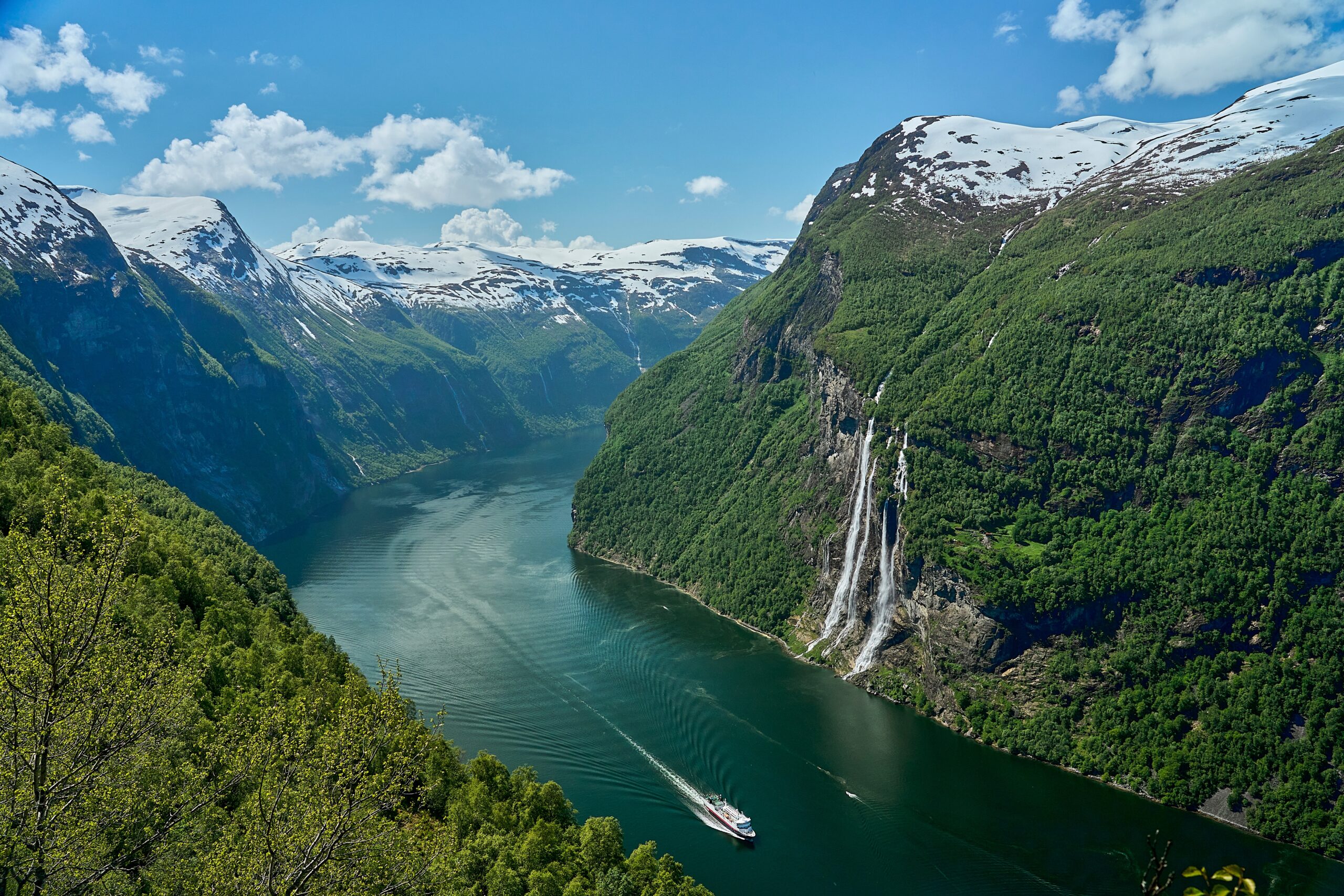
The fjords of western Norway are often described as dramatic, but travelling through them by ship reveals a quieter side too.
Steep cliffs rise directly from the water, waterfalls spill down forested mountainsides, and small villages appear tucked into the landscape in ways that feel almost improbable. UNESCO-listed fjords such as Geirangerfjord and Nærøyfjord are best experienced slowly, where the journey through the scenery becomes as memorable as the destinations themselves.
Smaller ships can venture further into narrower waterways and quieter harbours, allowing for a more immersive experience of the region.
Time here is often shaped by simple moments. Standing on deck in still morning conditions, watching low cloud move across mountain peaks, or arriving into remote villages where life continues at a gentler pace.
It’s less about rushing between sights and more about absorbing the atmosphere of the landscape around you.
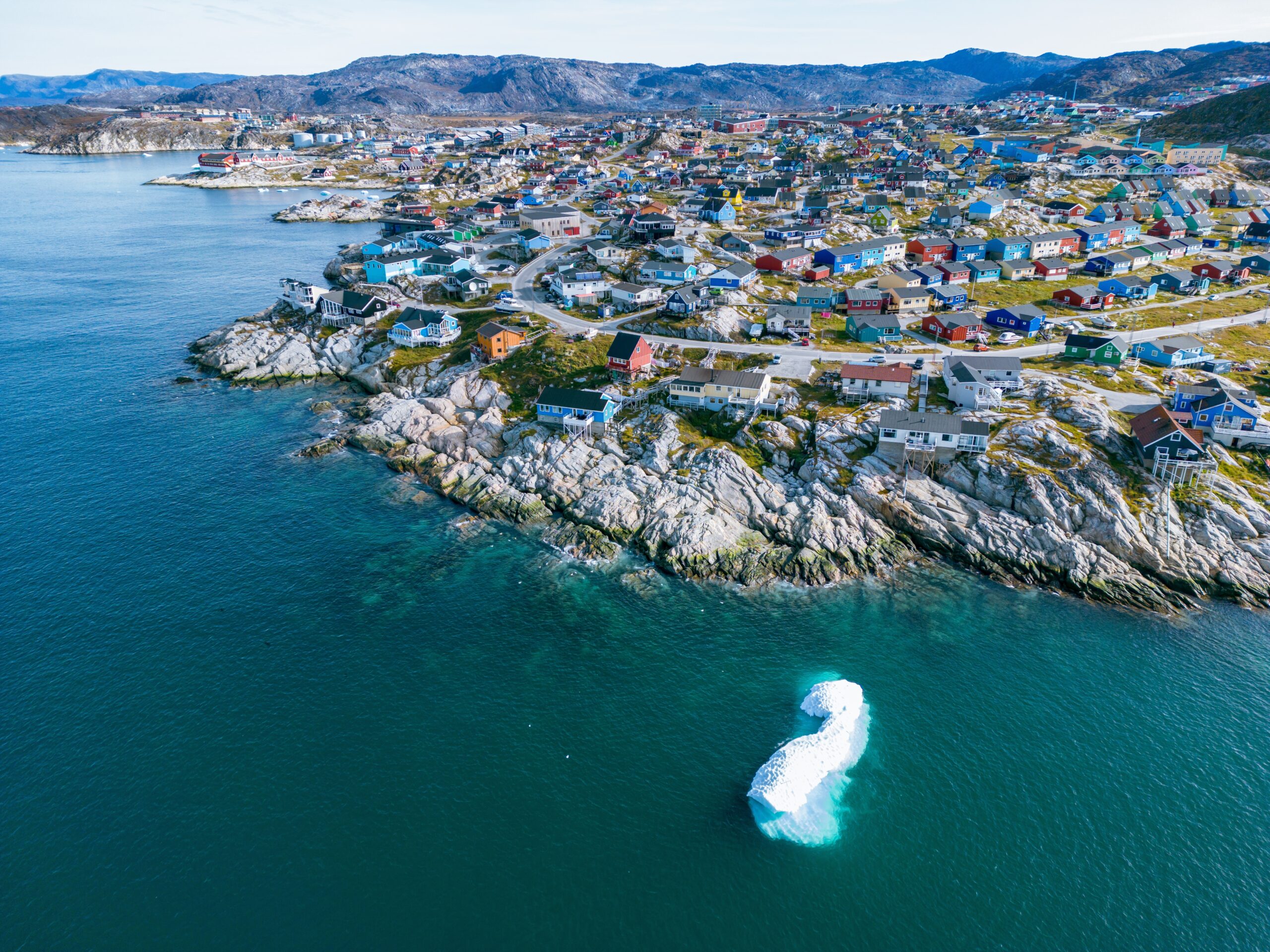
The Kimberley, Australia
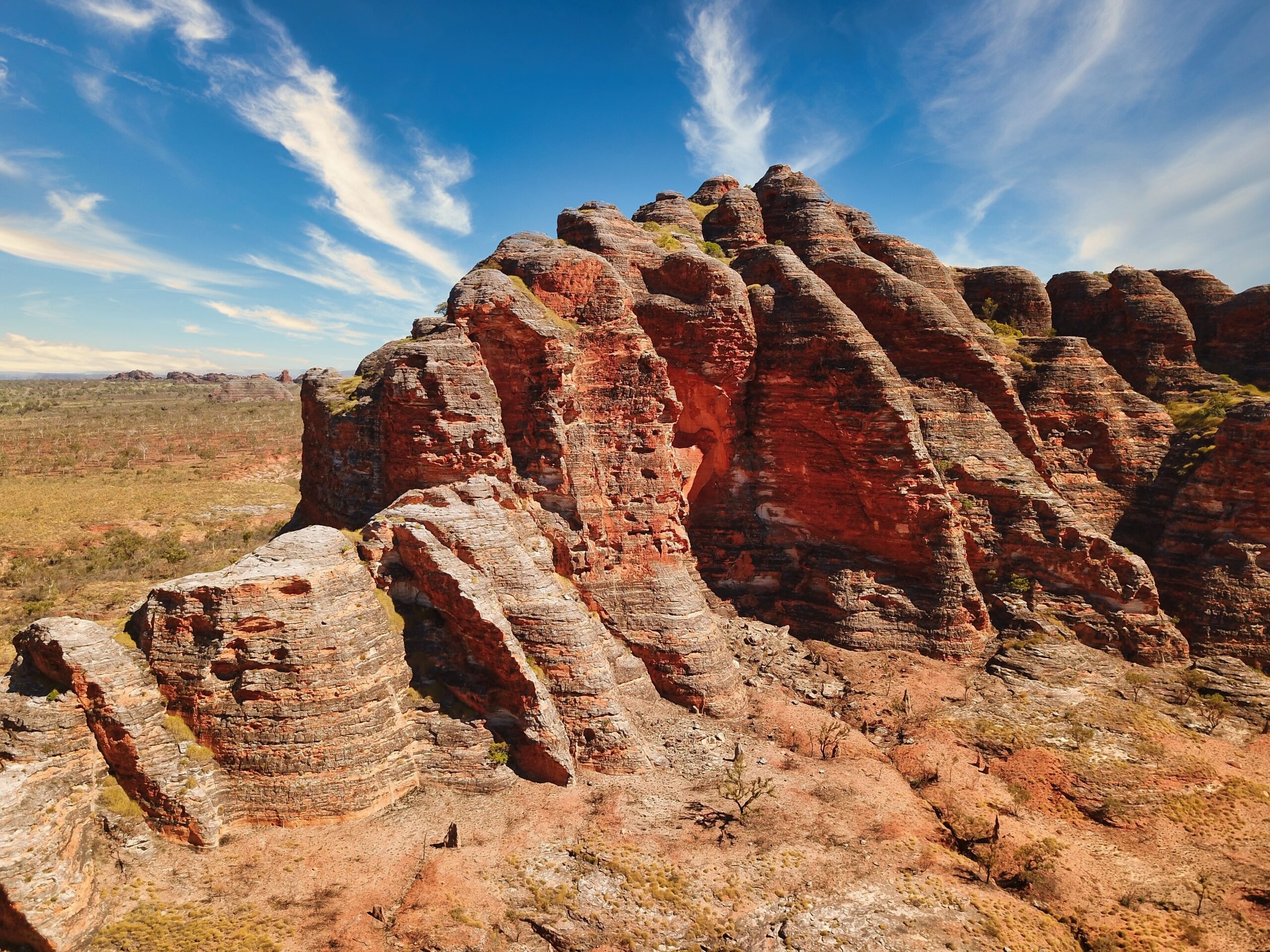
Remote, rugged and shaped by extremes, the Kimberley coastline is one of Australia’s last true wilderness regions.
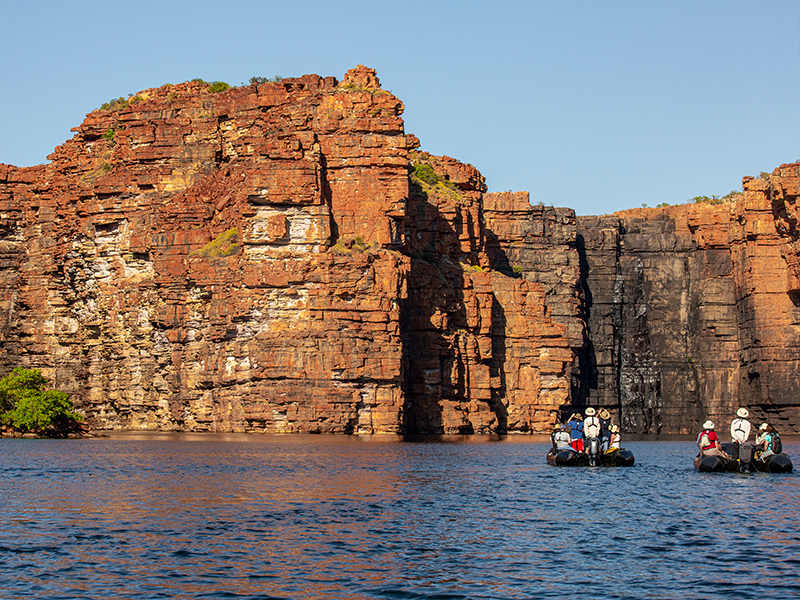
Stretching along the country’s northwestern coast, this UNESCO-recognised landscape is defined by towering sandstone cliffs, tidal rivers, waterfalls and ancient Aboriginal rock art sites that date back thousands of years.
The scale and isolation of the Kimberley make expedition cruising one of the most rewarding ways to explore it. Many areas are inaccessible by road, and the tides themselves shape daily exploration, influencing where ships can travel and when landings are possible.
Days may involve zodiac excursions through narrow gorges, encounters with saltwater crocodiles and birdlife, or walks to remote rock art galleries that offer powerful insight into one of the world’s oldest continuing cultures.
The landscapes feel raw and elemental, changing constantly with the light and tides.
Why UNESCO sites feel different by small ship
What connects many of these destinations is not just their UNESCO status, but the way exploration cruising allows you to experience them.
Rather than arriving briefly before moving on, small ship journeys create space to travel more slowly, access quieter places and spend longer immersed in the landscapes and cultures around you.
In many cases, the journey itself becomes part of the experience. Watching ice drift past your cabin in Greenland, navigating coral-rich waters in Indonesia, or arriving into remote fjords at first light often stays with travellers just as much as the sites themselves.
Because some places are not simply meant to be seen.
They’re meant to be experienced.
From remote archipelagos and wildlife-rich coastlines to culturally connected waterways and polar landscapes, exploration cruises offer a different way to experience the world — one shaped by depth, discovery and meaningful time in the places you visit.
If one of these UNESCO World Heritage Sites has sparked your curiosity, our Cruise Consultants are here to help you find the right journey, ship and style of exploration to match the way you want to travel.